


 General Assembly
 Security Council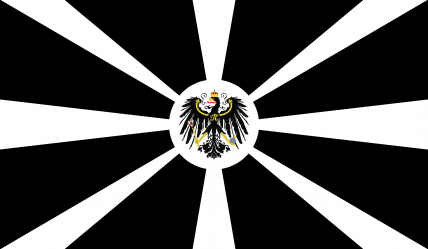
7
Prukov
Kingdom of PrukovKönigreich Prukov (
 German)
521-1995
|
|
Above: Flag of Prukov (1770-1995) | Royal Arms (1537-1995) |
Motto: Ex glande quercus
"From the acorn, the oak"
Anthem:"Heil dir im Siegerkranz"
(1770-1995)
(English: “Hail to Thee in Victor’s Crown”)

Capital | Gratberg (521-1312, 1539-1995) |
Common Languages | |
Religion |
|
Demonym | Prukovian |
Government King (521-1335, 1896-1995)[1] |
Wieland I (first) |
Legislature | None |
History | 521 1995 |
Population | ~4,500,000 |
Currency | Prukovian Thaler (521-1411) |
Preceded by Despotate of Gratberg |
|

[1] After the Kherkovian Unification, the title ‘King of Prukov’ has been factually merged with
‘Kaiser of Kherkov’, and exists more as a ceremonial title, not holding any legal or administrative
power in of itself.
The Kingdom of Prukov (German: Königreich Prukov) was a Kherkovian kingdom situated in central-northern Kherkov that originated in 521. It was dissolved in 1995 after merging with Kheria and a number of smaller states to form Kherkov. Together with the Archduchy of Kheria, it was one of the two major powers that dominated affairs in the Kherkovian region from the medieval era. Its capital was Gratberg. Other major cities included Wolten-Darstel and Mittau.
Prukov was ruled by the House of Zohlburg since the founding of the state in 521. Strict inheritance laws directly intertwining the family with the nation’s governance meant that the throne always passed to a von Zohlburg, no matter how distant. The Kingdom would go on to found the Imperium Khaekovia, putting an end to the Kriegszustände Zeitalter (Age of Warring States) and laying the foundations for a unified Kherkovian identity.
The nation would eventually lose its status as Kherkovian hegemon and the imperial throne to Kheria by the Late Middle Ages, with the two jostling for power and the position of Emperor constantly, fighting numerous wars against one another. However, Prukov would rise again to the status of great power during the reign of Frederick V, who would expand Prukovian influence across the entirety of the Albionian continent. After outpacing Kheria in the first and second Industrial Revolutions, the foundations for unrivalled Prukovian hegemony in Kherkov were laid. The 1941-1946 Great Patriotic War saw Kheria decisively crushed, and Prukov solidifying its position as the leading Kherkovian power.
Economic and diplomatic initiatives to unify the Kherkovian nations were spearheaded by Prukov in the post-war era of the 20th century, reviving the integration of the defunct Imperium Khaekovia and bringing the disparate states together. Despite this, political resistance from Kheria and the eastern states hampered Prukovian plans for integration, and so the Kherkovian states were only finally united by Prukovian military conquest in what would become known as the ‘Unification Wars’, lasting from 1992-1997.
As the leading state in the formation of modern Kherkov, Prukovian legal, political, and cultural traditions see their continuance in modern-day Kherkov, as the Imperial government has suppressed all other regional cultures since unification. Some external commentators have described the contemporary totalitarian Kherkovian state as “Prukov writ large”, and contended that Prukov has ceased to exist “in name only”.
1 Symbols
2 Etymology
3 History
3.1 Union of Gratberg and Wolten
3.2 Forty Years’ War
3.3 Pax Prukovia
3.4 From Reformatio Imperii to the Great War of Religion
3.5 Return to Hegemony
3.6 Frederick V and Vorherrschaft
3.7 Industrial Era
3.8 The Great Patriotic War
3.9 Kherkovian Unification
3 State
4 Religion
For much of the medieval era, the Kingdom of Prukov was represented by the Royal Standard of the House of Zohlburg, which in turn was a bannered version of the Zohlburg arms. This banner featured a white dragon on a black field crossed with three black wolves on a white field, the symbols of the cities of Gratberg and Wolten-Darstel respectively.
As a distinctive Prukovian – and to a wider extent Kherkovian – national identity developed over the centuries, the image of an eagle became increasingly associated with Prukov, due to the army’s regimental flags. After Prukov’s adoption of Protestantism and the creation of its own state church, a Royal Edict was issued changing the arms of the nation to that of an eagle. A new national flag featuring the Prukovian Eagle was adopted after the defeat of the Nobility in 1770. The Prukovian Eagle remains a prevalent symbol in modern Kherkov, featuring in the symbols of many military and government institutions, the vast majority of which are direct descendants of their Prukovian counterparts. The Prukovian eagle is central in the modern flag of Kherkov, symbolising Prukov’s leading role in the formation of the modern state.
While the origins of the name ‘Prukov’ are not completely understood, it is largely agreed to be a term attributed to the northern part of Kherkov by the first Christian missionaries to the region. The word is believed to be a portmanteau of the Latin for Kherkov – ‘Khaekovia’ – and the Latin word ‘primis’ (‘first’), as many early Christian texts referred to a ‘Prikovia’ which later evolved to ‘Prukov’. This means that the meaning of ‘Prukov’ roughly translates to ‘first land of Kherkov’. Wieland would be granted the title ‘Rex Prikovia’ (‘King of Prukov’) by Catholic missionaries after the conquest of Gratberg in 521. These missionaries would go on to become the first Kherkovian bishops.
The cities of Gratberg and Wolten-Darstel had been founded after the burgeoning Surheimi Republic had financed colonisation inland after its successful rebellion against the Roman Empire. The two cities quickly grew to eclipse the Surheimi heartlands. Gratberg was situated on large deposits of natural minerals. Attracting prospectors from all over the Republic, the city grew rapidly in population, and combined with high levels of integration with the Kherkovian natives, it soon became the largest Kherkovian city. Wolten-Darstel became an important coastal city and centre of commerce.
With their distance from the capital, the two cities drifted away from the Republic. Local governors began to institute their own laws in open defiance of the Republic Senate, and the two cities were key players in the formation of the anti-Republic coalition. Their troops formed a large part of the coalition force at the Battle of Bridschloss in 291, the battle that saw Republican forces decisively defeated and the beginning of independence for the cities. The most prominent merchant family of Wolten-Darstel seized power and declared themselves Lords of the city. In Gratberg, military commanders took over the administration of the city, with the highest-ranking officer claiming the title of ‘Despot’. With no common enemy, relations in the coalition broke down, and the Age of Warring States began.
20th Century illustration of
Wieland entering Gratberg
The centuries of near-constant warfare had greatly increased the importance of the castle Zohlburg, which was situated on a strategic chokepoint to the east of the city of Gratberg. Funding had poured into the castle and surrounding fief from the capital of Gratberg, and the ruling family eventually saw their wealth and political power rise to rival that of the Despot’s family. Concerned with retaliation from a jealous capital, the Barony of Zohlburg established ties with the Lordship of Wolten, the two ruling families intermarrying throughout the Age of Warring States.
The year of 516 saw Wieland coronated as Baron of Zohlburg. Notably, Wieland was one of the first Christian converts in Kherkov after housing missionaries fleeing persecution in neighbouring Herbronn some years prior. He declared his new territories to be a Christian realm, and financed the construction of churches and facilitated the conversion of his subjects. This generated animosity between the Barony and the Despot of Gratberg, which viewed Christanity as a threat to his rule. In 519, the Lord of Wolten and his primary heir died whilst at sea. This led to Wieland, the Lord’s closest surviving male relative, taking command of the Lordship of Wolten. Lord Wieland would declare a holy war against the neighbouring city of Herbronn, subjugating it and connecting his territories via a land border.
The assumption of the Lordship of Wolten led to the independence of Wieland’s realm, despite attempts by the Despot of Gratberg to negotiate fealty. A year later in 521, Wieland’s forces laid siege to Gratberg in an offensive war against the Despotate. The armies of the Despotate sallied out to meet the allied armies, with historians mostly agreeing that the troops abandoned their defences as the rampant corruption in the realm meant that the city was not able to withstand a siege. Many units defected to Wieland’s army, and Gratbergian forces were crushed. After taking the city, Wieland’s bishops coronated him ‘King of Prukov’. The Kingdom would continue its military conquests until the death of Wieland in battle in 541.
Stone carving of the double-headed eagle of
the Imperium Khaekovia
This build-up would culminate in 1014, where a dispute over the succession to the Lordship of Binnock would lead to all-out war between the two power blocs. Prukovian forces struggled to break the defensively-oriented armies of Lyrol, which had extensive experience in fighting off raids from the tribes of Forten and the Duchy of Gorny. Long and harsh winters blunted any major Kherian advance into Prukovian lands, however, and so the war descended into a bitter stalemate.
In the 1030s, the war began to turn in Lyrol’s favour. During this period of rapid Lyrolite advance, King Sigismund IV of Prukov was killed in battle whilst leading an army, leading to the ascension of King Konstantin I to the Prukovian throne in 1040. Konstantin is regarded by many contemporary historians to be the reason for Prukov’s victory in the war. Prukovian strategy shifted to focus on delaying the Lyrolite forces until its army could be reformed into a specialist anti- Lyrolite force, heavily employing archers and heavy cavalry. The Konstantinian reforms achieved this, and the new Prukovian army was used to devastating effect in a counteroffensive. By 1056, the Lyrolite capital of Drussgrad had been sacked by Prukovian troops, and the Forty Years’ War – as it would come to be known – had ended. The Kingdom of Lyrol was dismantled into its constituent duchies.
The war had taken its toll across the entirety of Kherkov, and there was little appetite for further resistance to Prukov, which had emerged as the domineering power after the war. In addition, many states were greatly concerned about foreign invasion of the weakened Kherkovian states, and so they turned to Prukov for leadership. Due to staunch Prukovian support of Rome after the Great Schism and its suppression of any local rulers in support of the Orthodox Church in Lyrol and its southern sphere, Pope Victor II granted Konstantin the title of Imperatoris Khaekoviam after the war. States in the Prukovian sphere of influence, as well as the defeated Lyrol and its allies, swore fealty to Konstantin as the first Emperor of the Imperium Khaekovia (Empire of Kherkov/Kaiserreich Kherkov) in 1056.
The capture of the Hackinian King in 1224
cemented the Imperial victory
Prukov and its Imperial forces would fight a long series of wars against Hackinian forces from the end of the 11th century until 1224, when it was clear that the Kherkovians had won domination of the region. Signing a peace treaty in the same year, the Hackinian Kingdom recognised Imperial dominion over the area. This led to extensive funnelling of resources from the conquered provinces back to the Prukovian heartlands, establishing important routes of trade. The most important of these routes ran through the southern city of Rherkovo, which would grow to replace Drussgrad as the most important southern Kherkovian city. The conquered region also saw an influx of Kherkovian settlers, who were given positions of power and prominence over the local population.
However, the cost of administering control over the region meant that Gratberg had to increase taxes on its feudal subjects, creating discontent within the Empire, and forcing the Emperor to make concessions on conscription in return, limiting the size of the army that Prukov could levy. Soon after, Hackinia launched attacks against Imperial strongholds in the region. Prukovian armies were forced to retreat, and by 1301, Imperial forces had only managed to halt the Hackinians at the Rodameuschel mountain range. This was deemed to be the new border in the ensuing peace treaty.
These devastating losses led the Prukovian Emperor to pass the Imperial Edict for Defence of the Wider Kherkovian Realm. This law required that all states would, using their own forces, come to the aid of any Kherkovian state attacked by a foreign power. The law was highly effective in securing the external Kherkovian borders, and indeed they remain largely unchanged to the modern era. However, evidence suggests this reinforced the idea of Prukovian weakness in the eyes of its vassal states, which had begun to lose confidence in Prukovian leaders after the string of disastrous defeats to Hackinia. The Duchy of Kheria in southern Kherkov had risen rapidly in strength and diplomatic standing. Under Kherian leadership, a large number of southern Kherkovian states demanded relaxations to their feudal obligations, and Prukov acquiesced to them in order to avoid rebellion. This led to a unification of a number of duchies under Kheria, which proclaimed itself to be the Archduchy of Kheria in 1306.
This proclamation coincided with the beginning of what would become known as ‘The Great Plague’ in northern Kherkov, a bubonic plague pandemic that would devastate the northern states and Prukov in particular. While the exact origins of the disease are unknown, it is widely believed that fleas aboard trade ships in Gatten were the primary vector for the spread of the disease. The fleas are believed to be of a now-extinct genus specifically adapted for the colder climate of northern Kherkov, which facilitated the disease’s rapid spread around the northern states in particular. The plague devastated the population of the northern states, which fell by almost half and took decades to recover. Gratberg in particular was badly damaged during the plague, losing almost three-quarters of its population. This led to the Zohlburg dynasty and much of the Prukovian upper classes retreating to Wolten-Darstel, which was named the new capital of Prukov – a title Gratberg would not reclaim until over two centuries later. By contrast, the southern states emerged relatively unscathed, only losing a small fraction of their total populations on average.
This emboldened Kheria and its southern allies, who rose up in rebellion against Prukov attempting to claim the Imperial Throne. Kheria had promised to reform the Imperial succession to be electoral and declare some of its key allies to be elector states in order to secure their support. While Prukovian forces were dilapidated, it still had significant support in the north, and was able to fight a bitter struggle against the Kherian coalition. While a Kherian victory looked likely to most onlookers, the timeframe of such a victory was unpredictable, and so eventually the two powers came to a peace agreement when Gratberg was put under siege in 1329. Kheria would assume the throne and the electoral system would be implemented, but Prukov and a number of its allies would be made elector-states in addition to Kherian allies.
The erosion of Imperial authority and the now apparent lack of a single, clear hegemon - despite Kherian victory - led to a series of wars erupting around the Empire as local lords vied to increase their power. Prukov too engaged in numerous wars attempting to regain power and assert itself in the eyes of the Elector-States, but these attempts were largely unsuccessful. A number of revolts in its border provinces also saw the Kingdom shrink over this period. Kheria had no such rebellions, and continued to increase its standing in Kherkov. By the end of the Bloody Century, Prukov had been firmly replaced by Kheria as the dominant Kherkovian power, as Kherian troops began to enforce Imperial law and bring stability to the region.
.
From Reformatio Imperii to the Great War of Religion
‘The Tragedy of the King’, 16th Century painting of King Otto VI’s assassination
After Valentin’s death and a change in Prukovian leadership, the diplomatic progress that had been made was almost immediately lost. Prukov began to agitate further and further for the rollback of reforms, and eventually became the leading voice against centralisation. Historians generally attribute this rapid change in stance to political opportunism - an attempt to both subvert Kherian authority after the death of the popular Valentin and win Elector-State support in order to win the throne. The Imperial vote of 1479 was narrowly won by Kheria, and the child Oskar was crowned Emperor. Prukov continued to test Kherian leadership until the beginning of the 16th century, where the nation’s Imperial ambitions would be cut short. A series of coordinated assassinations against the Prukovian leadership – including the King – left the nation in disarray, allowing Kherian armies to easily overwhelm Prukov and its allies. Many Prukovians would be flayed during the reign of Oskar ‘the Terrible’, and Prukov would be rendered unable to challenge Kherian dominance until after Oskar’s death in 1532.
Under King Frederick III, Prukov would become an early adopter of Protestant ideas after their spread from Europe. The Papacy had grown to become a staunch supporter of Kherian rule, especially after the reign of Valentin I. Frederick’s conversion would inspire many other states across the Imperium. In 1536, Prukov announced the formation of the ‘Protestant League’, a coalition designed to protect and further Protestantism in the Imperial Diet. Kheria began to push through Decrees, first outlawing a Protestant Emperor, and then effectively declaring Protestant rulers as illegitimate by 1539. The leaders of the League refused to give up power, leading to what would become known as the “Great War for Religion” in Kherkov. Lasting from 1540 to 1576, the war would involve almost all Kherkovian states in a highly destructive war. Despite the numerical advantages of the Catholics, the Protestant League would ultimately emerge victorious.
Modern historians are divided on the issue of how the Protestant side prevailed, but usually cite three main reasons, varying in degrees of importance depending on the scholar. The professionalism of the Protestant forces, who had been preparing for such a conflict since the formation of the League, is often contrasted with the hastily-assembled Catholic armies. It is argued that the Kherian Emperor, Nikolaus, did not foresee such a wide-scale conflict, and was generally not competent enough to command such a large-scale campaign. King Frederick III is mostly regarded as a successful commander, and entrusted armies to his most capable Lords and allies. This allowed the Protestant forces to be highly mobile, capturing strategic points quickly and efficiently, and striking Catholic armies at their weakest. Finally, some historians argue that the zeal of the Protestant forces was far greater than in the Catholic lines, and that this greater morale gave their armies a distinct edge. Protestant priests would often accompany armies, even onto the field of battle, preaching a narrative of a fight for their very survival against the heretic Catholic Emperor. While most scholars agree that this war marked the beginning of Kherkovian Protestantism’s intertwinement with militarist and nationalist ideologies, and that routs were far more prevalent amongst the Catholic side, they are split on just how much the war was factually affected by the ‘zeal’ of Protestant forces. However, this narrative is the preferred view of the modern Kherkovian Government, which mandates its teaching in the education system.
Emperor Nikolaus was killed during the last battle of the war, and having left no heir, Frederick was easily elected Emperor, Prukov finding itself as the leading Kherkovian power once again. He immediately revoked all anti-Protestant Decrees, and new Decrees banning Catholic priests from converting Imperial citizens was introduced. Rulers across the Imperium were also forced to convert to Protestantism, and with the defeat of all major Catholic powers in the previous war, smaller states soon complied.
Kheria had been left leaderless with the death of Nikolaus. The various Dukes had entered into a power struggle, rising up in rebellion and raising local levies against one another. The Prukovian and Protestant armies were forced to continue occupation of the country in attempts to keep the peace. Eventually, the League threw its support behind Duke Maximillian Fahringen and his allies, who had advocated a ‘religious peace’ before the outbreak of the Great War for Religion and attempted negotiations with Prukov. After Nikolaus’ death, he had converted to Protestantism. With the help of Prukovian forces, the Fahringen alliance quickly crushed the other noble families, and Maximillian was crowned as the first Archduke of his name.
The installation of the Fahringen dynasty in Kheria led to the longest period of amicable Pruko-Kherian relations in Kherkovian history. For over a century, the two powers would cooperate on Kherkovian affairs. Arguably the most significant development during this period was the unification of the various Kherkovian Protestant churches into one single entity, the Reichskirche (Imperial Church). The head of faith title for the Church was attached to the title of Emperor. The first Archbishop of the Church would immediately declare the blessing of God on the Imperium. This led to the name Heiliges Kherkovisches Reich (Holy Kherkovian Empire) being adopted by Imperial officials in lieu of Imperium Khaekovia, despite the latter remaining the official name. The island of Wohnsel was also colonised by Prukovian forces during this time.
.
Frederick V and Vorherrschaft
The period of internal Kherkovian peace would come to an end in 1704 after Kherian nobles revolted and deposed the Fahringen dynasty. The new ruling class had united under an anti-Prukov policy, and began to challenge Prukovian Imperial authority, whilst simultaneously building up a strong fighting force. Prukov would declare war on Kheria 22 years after the revolt in an attempt to restore the Fahringen dynasty, starting the 2nd Imperial Punitive War. The war, however, would result in a Kherian victory, due to Prukovian forces largely consisting of lightly trained levies. By 1741, Prukov was defeated, and Kheria seized land in the resulting peace treaty. Anger towards Kheria ran high by the death of King Otto IX in 1744, viewing the war as a betrayal of Prukov’s programme of unified Imperial prosperity.
Frederick V would capitalise on this national feeling of revanchism in order to greatly reform the Prukovian state. The name of Frederick’s programme of reforms, and resulting ideology, was labelled ‘Vorrherrschaft’ by the King’s contemporaries. This name came from Frederick’s inaugural address to the nation, where he spoke of Prukov’s destiny to rule Kherkov not through diplomacy and the Imperium, but through strength and might alone – “[Prukov] shall not rule. It shall dominate, in totality”. Frederick openly disparaged the nobility, stating that they were largely to blame for Prukovian defeat, and that only a professional, meritocratic military united under the King could achieve such aims. In private letters, Frederick also explained to allies and family members that the idea of ‘domination’ also referred to the Crown over its citizens, and that the military and church would be tools to achieve this. Frederick brokered deals with Prukovian priests of the Imperial Church, which prompted sermons all over the country on ‘spiritual preparation’ – the idea that every citizen must be ready to give their lives for the King. This has been termed an early form of total war, as the lines between civilian life, the army, and the state were blurred in Frederick’s speech and subsequent reforms.
Frederick would make a series of meritocratic reforms, including the removal of the purchase of commissions, in the military. Declaring war on Surheim in 1761, Frederick would personally lead his new army to victory, rapidly capturing Bridschloss and ending the war by 1762. Reparations and immediate payments were demanded from the Surheimi Republic, funds that were used to create and maintain a much larger standing army. The war also saw yet more commoners promoted to officer roles, and the further dismissal of noble officers that had been deemed incompetent.
Artist’s depiction of Frederick V leading troops during the Battle of Vintenheim, 1770
Nobles that had been driven out fled to the Imperial Court in Kheria. Their influence, combined with Prukovian aggression, led to the 3rd Imperial Punitive War, declared by Kheria in 1778. Prukov is able to win a string of early victories. The Battle of Glauben in 1779 was a decisive victory for the Prukovian Navy, leading to complete domination of the seas and an ensuing blockade of the Kherian coast. The Battle of Sweikusen in 1781 was the decisive battle of the war. The Prukovian Army, led personally by King Frederick V, crushed the numerically superior army of Kheria and its allies, which was led by Emperor Franz II. The victory would allow Prukov to begin what would be called the ‘Great Siege of Rherkovo’. Unwilling to storm the city, Frederick would lay siege to the capital from 1783 to 1788, fending off attacks from quasi-guerrilla enemy armies. Eventually, the city fell, and Prukov would sack the settlement. After this, Kheria made peace. Prukov pushed for land and the return of Prukovian nobles, disregarding the Imperial title, and indeed signed an agreement recognising Kheria as the rightful rulers of the Empire. Frederick often spoke against the Empire, and was against using it as a device to achieve his goals, instead defaulting to military conquest. After the uprising, Frederick’s reign was mainly spent consolidating the Crown’s power, although several Prukovian regiments did participate in the quelling of the Republican Rebellion in Saint-auguste at the end of the 18th Century.
Frederick’s reforms laid the foundations for the modern Prukovian, and Kherkovian, state, having a substantial effect long after his passing in 1792. To this day, the Kherkovian Throne retains radical title to all land in Kherkov, and the military is intertwined with the administrative and legal systems of the modern nation. This focus on and empowerment of the military – and to a lesser extent, the Church – to strengthen the Prukovian Crown is what has led many modern historians to label Frederick’s reforms as a form of “proto-fascism”, arguing that this foundation enabled the high levels of totalitarianism that were introduced in the early 20th Century, and that are still seen in modern Kherkov.
Prukovian ‘Death’s Head’ Hussars clashing
with Britcani Cuirassiers in the 1st
Britcani War
As the technologies of the Industrial Revolution had begun to take hold in Kherkov, Prukov embraced the new manufacturing processes comfortably. Due to climate, Prukovian society was already highly urbanised compared to its contemporaries, and with the advent of industrial factories and workshops urbanisation only increased. With the Crown in control of all land, the nation was able to push forward an agenda of rapid industrialisation in order to better facilitate warfare. The Prukovian population would expand rapidly during the 1800s, which would cement its position as the leading Kherkovian power.
Prukov would use its status in the Empire to agitate for war with Britcan, and minor border dispute in 1816 would result in the 1st Britcani War, sometimes called the first ‘Western War’ in Kherkov. Prukov led a coalition of many Kherkovian forces - including a sizeable contingent from Kheria - against Britcani troops. The war was a significant victory for Kherkovian forces, capturing the city of Northford in 1819 and extracting significant concessions from the Britcani side. The victory would inspire a new wave of nationalist thinking, as Kherkovian philosophers and scholars began to expand on the works of the Renaissance and Reformatio Imperii period.
However, like many other Kherkovian states, Prukov would refuse to support the Kherian-led 2nd Britcani War, which would ultimately end in humiliation for Kheria and the subsequent Revolution, ending in the dissolution of the Archduchy. As the title of Emperor of Kherkov had been attached to that of Archduke of Kheria, a vacuum was left, with many states looking to Prukov for answers. In continuing the policy of Vorrherrschaft, however, Prukov did not accept the title of Emperor and refused all legal obligations that came with it. With a lack of funding and support, Imperial institutions – which had been rapidly shrinking by this point – disbanded. Despite this, Prukov did claim the title of ‘Defender of the Faith’, and the headquarters of the Imperial Church was moved permanently to Gratberg.
In 1912, Wilhelm V would ascend the Prukovian Throne. His reign would follow the pattern of fascism in Europe and in Imperial Japan at the time, influenced by these regimes and also by scholars: particularly Charles Maurras but also to a lesser extent Georges Sorel. Wilhelm’s early reign would see little in the way of actual legislative reforms. The Prukovian Ministry of the Interior would start producing anti-Kherian and anti-liberal propaganda, key themes of the large national rallies that Wilhelm had organised. The monarchy would ally itself with any group it saw as supportive. This included the Young Kherkovians, a pan-nationalist paramilitary group that had formed in the wake of the Vurthalian War in Eastern Kherkov, as well as various football hooligan groups as football in Prukov became increasingly politicised.
Prukovian troops at the outbreak of war, 1941
Tensions with Kheria during this period ran extremely high, due to Prukovian opposition to Kherian Communism and Kherian support for the 1924 uprising. A number of crises eventually led to Prukov declaring war on Kheria in 1941. The element of surprise and the highly mechanised nature of the Prukovian Army led to immediate success for the Prukovian side, easily traversing the flatlands of Kheria. The Prukovian advance was only stalled at Rherkovo in 1942 due to adverse weather and logistics. In Eastern Kherkov, minor communist states that had allied with Kheria fared better against Prukovian forces, managing to blunt their advance. However, this defence put significant pressure on these states, which rapidly depleted their reserves of fuel and materiel. During the war, the Prukovian economy would be reorganised, and the nationalisation that had begun post-1924 was realised to its fullest extent. Business was fully nationalised under the Prukovian Ministries, and labour was reorganised in a corporatist structure designed to facilitate the war and the needs of the military, as dictated by the government.
Material shortages in the Eastern communist bloc eventually led them to launch surprise attacks on the minor, neutral democratic states of Eastern Kherkov. These attacks largely failed and the Eastern communist bloc’s forces became embroiled in fighting a losing battle against the democratic coalition. The transfer of Prukovian troops from the Eastern to the Southern front turned the tide of battle in favour of Prukov, and Rherkovo fell in 1944. The Kherian forces engaged in a desperate defence of their land, conscripting nearly every adult to fight in human wave attacks. However, by 1946, Kheria was utterly defeated. The new Archduke, installed by Prukov, signed the Treaty of Exbaden, ceding nearly half of Kherian territory to Prukov and effectively making Kheria a Prukovian vassal by enforcing strict rules of governance through the Treaty. King Wilhelm would die shortly after the war’s end. Victory meant that his reforms were cemented in Prukov, and he posthumously became known with the sobriquet ‘the Great’.
A Prukovian armoured column in 1993
While progress was made in limited aspects, Heinrich’s attempted programme of integration under his totalitarian agenda was rejected time and time again by the Eastern states. The RKV effectively split across two lines, with Prukov and its sphere of influence on one side and then the Eastern states on the other. In addition, the liberal faction in Kheria had managed to influence their government, and the Prukovian grip over Kheria lessened as many of the most authoritarian laws were relaxed in the southern nation. While Heinrich was able to increase ties with traditional Prukovian allies and its sphere, the Eastern democracies grew ever further from Prukovian aims, and ever closer together, while Kheria too embarked on a programme of liberalisation. By the time of Heinrich’s death in 1986, little progress towards a wider unification had been made, and many external commentators predicted that no Kherkovian unification would occur for at least five decades.
Prukovian foreign policy became more aggressive when King Frederick VII took the throne. Almost immediately, he declared that Kheria would need to begin the process of rolling back reforms, or Prukov would consider the Treaty of Exbaden violated. This led to widespread conflict between authoritarian and liberal factions in the country, with protests escalating over the next six years. By 1992, the liberal faction was able to convince the Archduke to allow the creation of an elected chamber that would share power. This led to all-out fighting on the streets, and the conservative side petitioned Prukov for aid. Prukov began its invasion of Kheria some weeks later, marking the start of the Unification Wars. The Eastern democratic states left the RKV in protest. The weight of Prukovian forces, its sphere, and Viperian blockade in the south balanced the odds heavily in Prukov’s favour. Additional mass defections to the Prukovian side by various nobles, military officials, and police units saw Kheria defeated by 1995, where King Frederick was killed personally leading the charge in the Siege of Szalburg. After the city’s capture, the People’s Empire was announced, formed of Prukov, the occupied Kherian territories, and the minor states still in the Prukovian sphere of influence. The new Kaiser took the regal name ‘Valentin’, and the Kingdom of Prukov was officially subsumed into the new People’s Empire.
For much of its history, the Kingdom of Prukov was structured as a traditional feudal monarchy, with the Kingdom divided into a vast number of fiefs, managed by the nobility, who swore allegiance to the crown. While the Crown did retain direct ownership over a number of fiefs – in particular, the Duchy of Gratberg and the Lordship of Wolten, the two founding cities of Prukov, the vast majority of the land was controlled by the nobility. Feudal contracts in Prukov generally operated more with a focus on manpower levies than tax, making the nobility wealthy but militarily weak. However, the nobility would still exclusively provide knights, and later officers, to the Prukovian Army until the mid-18th Century.
The Catholic church also owned a significant amount of land in Prukov, due to Christianity being intrinsically linked with the founding of the Prukovian state. The Church’s share of Prukovian estates increased after both the Great Schism and the formation of the Imperium Khaekovia. This land was all seized by the Crown after King Frederick III’s conversion to Protestantism in 1534 and the founding of the Church of Prukov, causing much of the Catholic priesthood to flee to Kheria.
After the Nobles’ Uprising of the 1760s, their land too was seized by the Crown, and their place in government replaced by military officials. These officers governed land on behalf of the King rather than directly owning it. While the majority of these officers were young nobles (called Junkers) who had sided with the King, a significant minority were non-nobles who had been promoted for their actions on the battlefield, or their military theories. Prukovian society became far more militarised, but at the same time, more meritocratic – anyone would be able to join this new ‘Kriegsadel’ (‘War Nobility’) provided they excel in military affairs.
From 1770, the Crown took a fully central role in the affairs of the nation, and consolidated its power. By the 20th Century and the reign of King Wilhelm V, new technologies and ways of thinking had developed. Wilhelm would further increase the powers of the Crown, and ultimately erase individuality and privacy from the nation. By the end of his reign, Prukov was nothing less than a fully totalitarian dictatorship, invested in every aspect of its’ citizens lives.
Catholicism was the dominant religion in Prukov for many years and played an important part in its founding. Wieland declared many of his wars to be ‘Holy Wars’ with the aim of bringing Christianity to all of Kherkov through the sword. Punishments for heathenism and heresy were extremely brutal in Prukov’s early centuries, with records showing that all sorts of citizens were maimed or executed for minor transgressions against the Church. By the time of the formation of the Imperium Khaekovia, these punishments had lessened. However, it did result in a deep entrenchment of Christianity in Prukov, with nearly all of the population outwardly claiming to be Christian for almost all of its history.
The 16th Century saw Prukov pivot away from the Catholic Church and turn towards Protestantism. Outwardly, this was a theological change, with the Prukovian Church adopting many Protestant doctrines, however both contemporary and modern scholars affirm that the change was largely conducted for political reasons. The Crown desired more control of the Prukovian estates, and over the clergy. In addition, Rome had become a staunch backer of Kherian rule since the reign of Valentin I. The nobility, with the clergy gone, would lose their main competitors, and increase their influence. With the support of the nobility and a new priesthood, the Catholic clergy was essentially ousted in a religious coup some years into Frederick III’s reign. The original clergy, if they did not flee or refused to leave, were often executed for heresy.
Religious conflict between Protestant and Catholic nations brought back much of the religious oppression of the early medieval period to Kherkov, and Prukov was no exception. Those who still clung to Catholic doctrine were hunted down by Royal troops and publicly executed without trial. After the Protestant victory in the Great War for Religion, Inquisitors of the various national churches – and later Imperial Church – would work to brutally suppress other faiths as Kherkovian rulers attempted to use the new churches to increase their political power. Much of the doctrine of the Church of Prukov formed the basis of the Imperial Church that formed later, due to Prukov’s position as the dominant power at the time. The doctrine mostly remains unchanged to this day, and elements of it can be seen in modern-day Kherkov, such as the attachment of Imperial Church Chaplains to military units.


